
What Is New Urbanism? A Beginner’s Guide to the Movement Shaping Our Cities

Imagine being able to walk out your front door to a vibrant street filled with cafes, parks, and familiar faces. No need to drive 30 minutes to go and get your groceries or spend what feels like an eternity trying to find parking. In many modern cities, that vision feels entirely out of reach, but it doesn’t have to be. New Urbanism offers a framework for creating cities that are more walkable, human-centered communities that feel connected. This post introduces the fundamental principles of New Urbanism and how they can transform the places we call home.
Congress for the New Urbanism (CNU) defines New Urbanism as “a planning and development approach based on the principles of how cities and towns had been built for the last several centuries: walkable blocks and streets, housing and shopping in nearby, and accessible public spaces. In other words: New Urbanism focuses on human-scaled urban design.” This ideology of human-centered design is what helps neighborhoods transition from resembling the image on the bottom left to looking like the image on the right. It turns a space that is empty and void of people into one full of life and vibrancy. By applying these concepts to new designs we are fostering the connections people are longing for.

New Urbanism emerged as a response to suburban sprawl in the 1980s. After the automobile, it became easier for people to travel farther, therefore leading to people wanting to move to homes with more land. Groups like CNU and the National Town Builders Association (NTBA) make an effort to educate builders, developers, and architects on new urbanist concepts so that they can begin to implement them in the work they do.
The key principles of New Urbanism are:
Walkability
Connectivity
Mixed Use Housing
Diverse Communities
Quality Architecture & Urban Design
Transect-Based Neighborhood Structure
Increased Density
Sustainability
Some great examples of these principles being put into action are communities like Seaside, New Amherst Homes, and Habersham. All of these communities have made a conscious effort to incorporate these various concepts into their plans, creating vibrant and sustainable places to live.

Seaside, located in Northwest Florida, was designed to be for pedestrians, not vehicles, with narrow streets and wide sidewalks. The walkable layout fosters social interaction, and the diverse housing options and integration of public space exemplify community-oriented design.

New Amherst in Cobourg, Ontario blends traditional neighborhood design with features such as rear lane garages, tree-lined streets, and homes with front porches, which encourage conversation between neighbors. It also includes a mix of housing types from condos to single detached family homes, future retail space, and a community garden. All of these design choices support an inclusive and self-sufficient community.
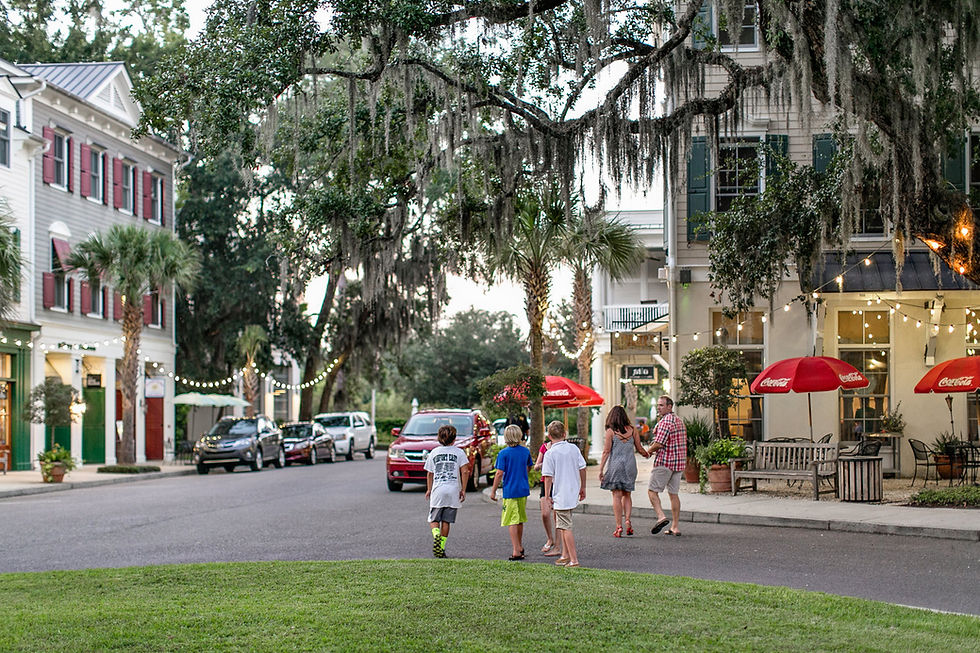
Habersham, located in Beaufort, SC, emphasizes green space, connectivity, and traditional low country architecture. The master plan includes preserved green areas, public parks, and a walkable village centre that promotes outdoor activity and community involvement.
Together, these communities demonstrate how thoughtful planning and design can create places that are not only aesthetically pleasing but also sustainable and diverse. These precedents serve as tangible models for how we can build neighborhoods that meet society's present and future needs.
New Urbanism is more than just an architectural or planning trend; it's a movement that reimagines how we live and interact within our communities. By prioritizing walkability, connectivity, and thoughtful design, it offers a practical and vibrant alternative to the isolating effects of suburban sprawl. As seen in communities like Seaside, New Amherst, and Habersham, New Urbanism creates places where people can grow; places that feel alive and are thriving. In a time where cities are facing growing environmental, social, and economic challenges, this approach provides a framework for building neighborhoods that are not only functional but also meaningful. By embracing these principles, we’re not just reshaping our cities, we’re reintroducing human connection at the centre of urban life.


Comments